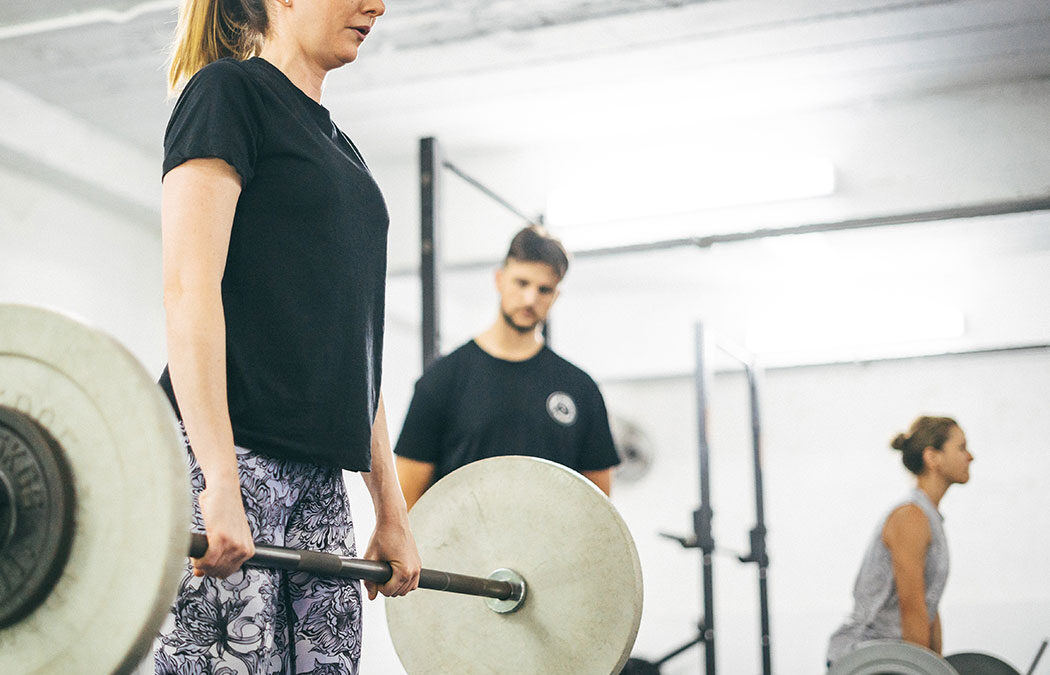
Have you stepped into a commercial gym and noticed that gym bro in a stringer, grunting and biceps curling in front of the mirror wearing wrist wraps and a belt? What about that strange person seated at the corner squat rack postured like the Boxer of the Quirinal with sleeves around their knees, a bag of chalk, and drinking from a milk jug full of water? These individuals are kitted out for their respective training one way or another. So that begs the question, should you equip anything in particular for lifting weights? In this article, we’ll discuss common types of lifting equipment and why you might need them.
Common types of lifting equipment
There’s gobs of lifting equipment available for purchase that ranges from popular yet ineffective to incredibly context-dependent. Think lifting gloves on one hand and a slingshot (an elastic sleeve worn to overload a portion of the Bench Press) on the other. Below is a list of six pieces commonly found in most gyms:
- Lifting gloves
- Wrist wraps
- Wrist straps
- Lifting belt
- Knee sleeves
- Lifting shoes
Barring the first, which we will discuss shortly, every piece on the list has a legitimate use. Despite differences in form, most variations of these pieces of equipment are identical in function. For instance, consider the classic “lasso” straps you loop yourself, “figure-8” straps or lifting hooks. Although the lasso strap I would argue is the best on the grounds of versatility and fit,
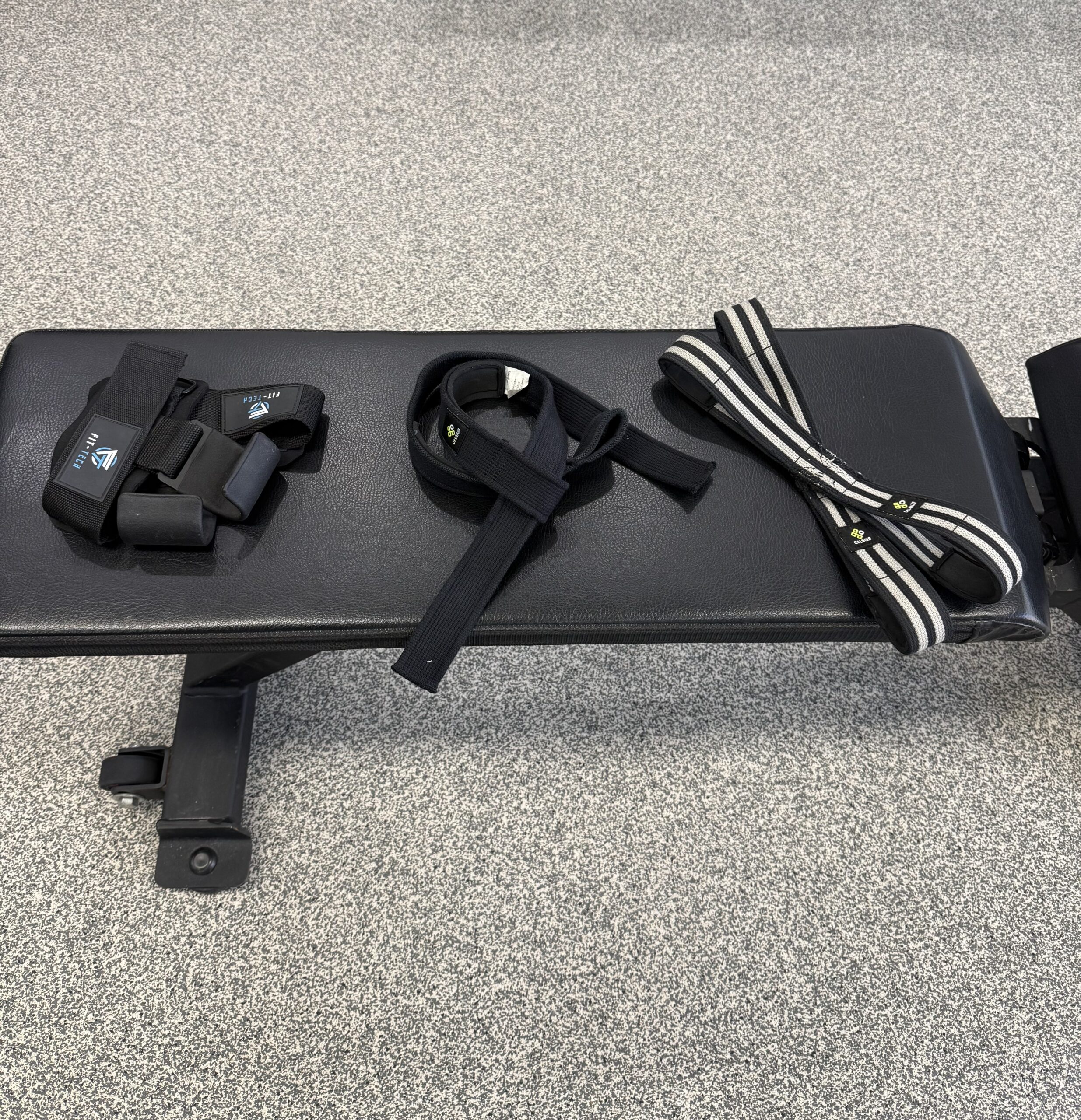
From left to right: lifting hooks, lasso & figure-8 straps
Why do people use lifting equipment?
Lifting equipment is typically used for three reasons. First, it’s the fashion! It’s an observable phenomenon that a desire for conformity may drive the acquisition and use of equipment. Often, no thought is given beyond the initial impression as to the practicality of equipment. For instance, people assume lifting gloves are better for the grip. The second reason is for actual performance benefits when someone is aware of the correct usage of lifting equipment. For example someone may squat while using a belt, wrist wraps, knee sleeves and lifting shoes. Third and last, sometimes equipment is worn to manage an injury. Depending on the knowledge and experience of the individual, this can be a bandaid solution or an intelligent workaround. What follows is a brief look at each piece aforementioned and their use:
Lifting Gloves:
Commonly worn to “protect” the hands, if anything, gloves make things worse. Sweaty hands glide inside the glove, creating friction and trapping moisture. Moreover, the material bunching creates more pinch points on the barbell. This increases the mechanical effort required to grip the bar. Fundamentally, gloves will make things harder and callus formation worse.
Wrist Wraps:
Wrist wraps are a long rectangular strip which can be more or less stiff depending on the level of support required. The wraps are tightly wrapped over rather than above the wrist (what most people do) and limit movement at the wrist. This is helpful for stabilising the wrist during heavy pressing movements by limiting unwanted movement, making force transfer more efficient.
Lifting Straps:
If nothing else, get these. You should be pushing your lower back, hamstrings and glutes (posterior chain) hard. Your grip will become a limiting factor on movements such as Romanian Deadlifts. Straps allow you to push exercises hard, predicated on a reliable grip. They work by creating mechanical friction and trapping the bar, preventing it from spinning in your hand and unfurling the fingers. Additionally, they can be useful when dealing with elbow tendinopathies as a way to offload the grip and still maintain load on the arm overall.
Belt:
A lifting belt is not for protecting the lower back. Instead, a lifting belt seems to improve performance by way of two mechanisms: increasing intra-abdominal pressure and increasing activation of the trunk musculature, most likely due to proprioceptive feedback of the trunk muscles contracting and pressing against a tight belt. Although research is fairly limited here, using a lifting belt does seem to reduce the perceived effort of a lift and anecdotally, most competitive lifters utilise a belt for heavy squats, deadlifts & presses ¹.
Lifting Shoes:
Lifting shoes do a few things. Firstly, the non-compressible rigid sole helps increase ground reaction forces when pushing into the ground, which is useful for driving out of the hole during squats, cleans and snatches. Secondly, the use of a heel elevation increases dorsiflexion at the talocrural joint (ankle), making it easier to drive the knees over the toes, facilitating a deeper squat while keeping the bar in balance over midfoot. Lastly, most lifting shoes have a strap across the middle to help with proprioception and feeling where mid-foot is.
Knee Sleeves:
Sleeves provide warmth and compression while enhancing proprioception. Knee sleeves are best used in squats, squat variations and other heavy lifts with deep knee flexion. Limited research shows they may be effective for increasing squat performance and managing knee pain, but individual results may vary ², ³. Again, anecdotally, many strong and competent lifters utilise knee sleeves for their heaviest squats but they are not necessary.
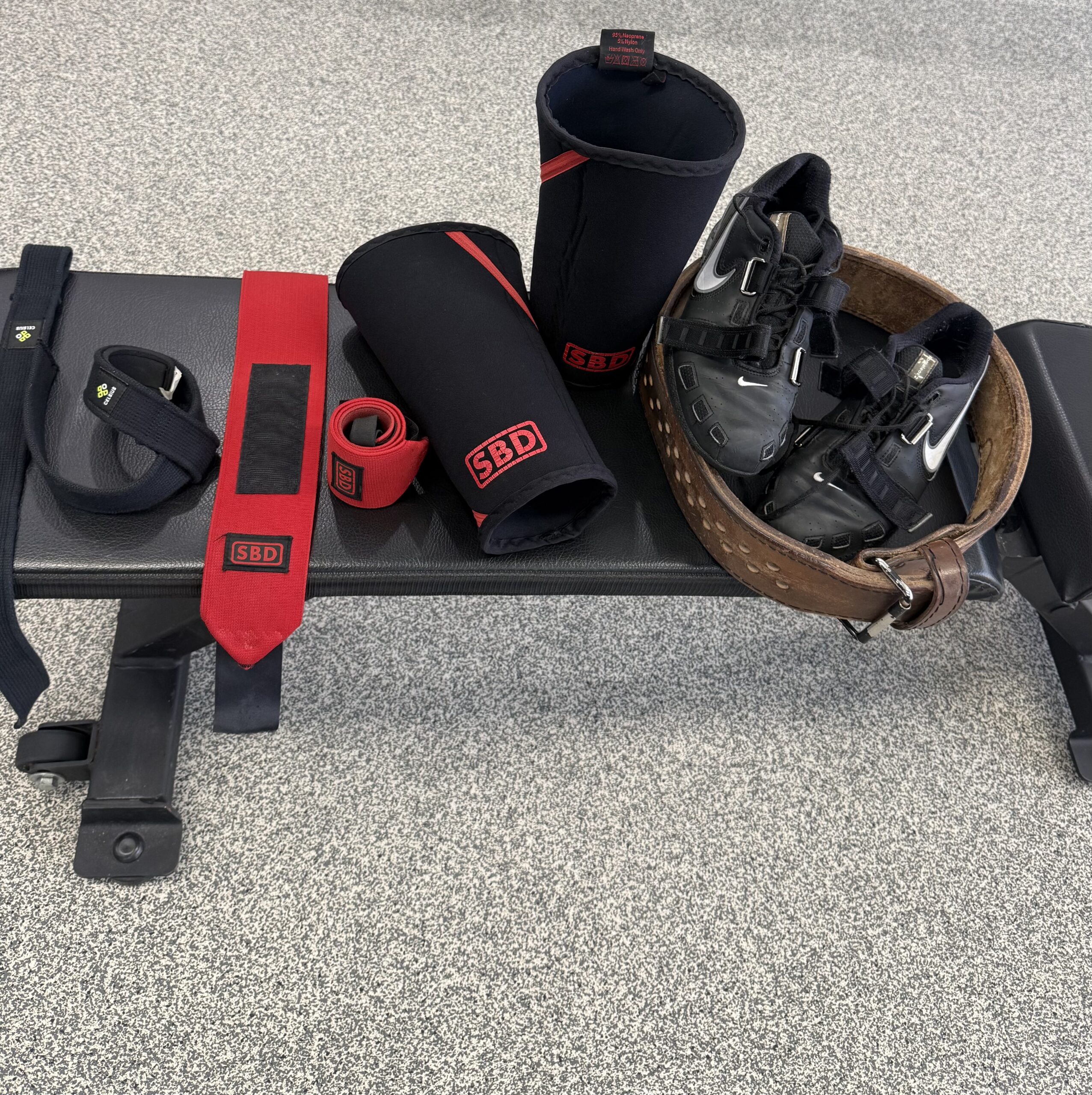
From left to right: lasso straps, wrist wraps, knee sleeves, a prong leather belt and lifting shoes.
Do you need to use lifting equipment?
You don’t “need” to do anything when it comes to utilising lifting equipment as long as you can satisfy physical activity requirements. That being said, the intelligent use of lifting equipment will likely improve outcomes. Personally, I extrapolate that the purposeful use of lifting equipment has an impact on results similar to chronic creatine usage. Creatine usage has been shown to improve chronic outcomes such as strength, power and hypertrophy by way of having more stimulating training sessions due to better energy substrate utilisation. If intelligent equipment usage helps someone push harder chronically, it’s fair to postulate they would be exposed to more stimulative events over a period of time.
For instance, if someone’s grip fails during a Romanian Deadlift, they may lack a robust enough stimulus for their posterior chain compared to having straps, going heavier, and being able to reliably push that exercise over a period of time. Second to straps, a belt will be useful for all the major standing lifts (think squats, deadlifts, presses and bent over rows) and lifting shoes may improve squat depth and stability. The good news is that quality equipment lasts. I purchased my current belt and lifting shoes back in 2020 and 2018 respectively and they are still going strong!
Wrapping it up
Lifting equipment isn’t a perfunctory fashion statement. Instead, lifting equipment can be an integral part of training effectively. This is predicated on knowing the “why” and “how” behind equipment. However, equipment is far from necessary and shouldn’t gate-keep anyone from engaging with physical activity. If you’re ready to train effectively, with or without the use of additional equipment, our expert coaches can help you get the most of out of your time and effort. Contact us today to get started.